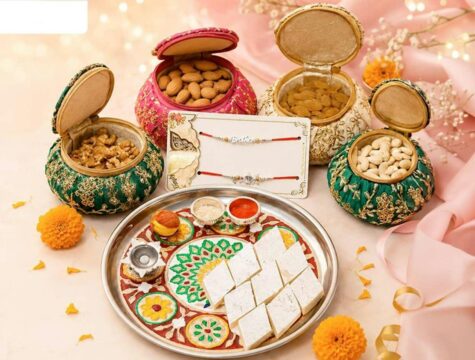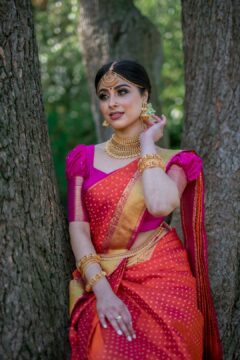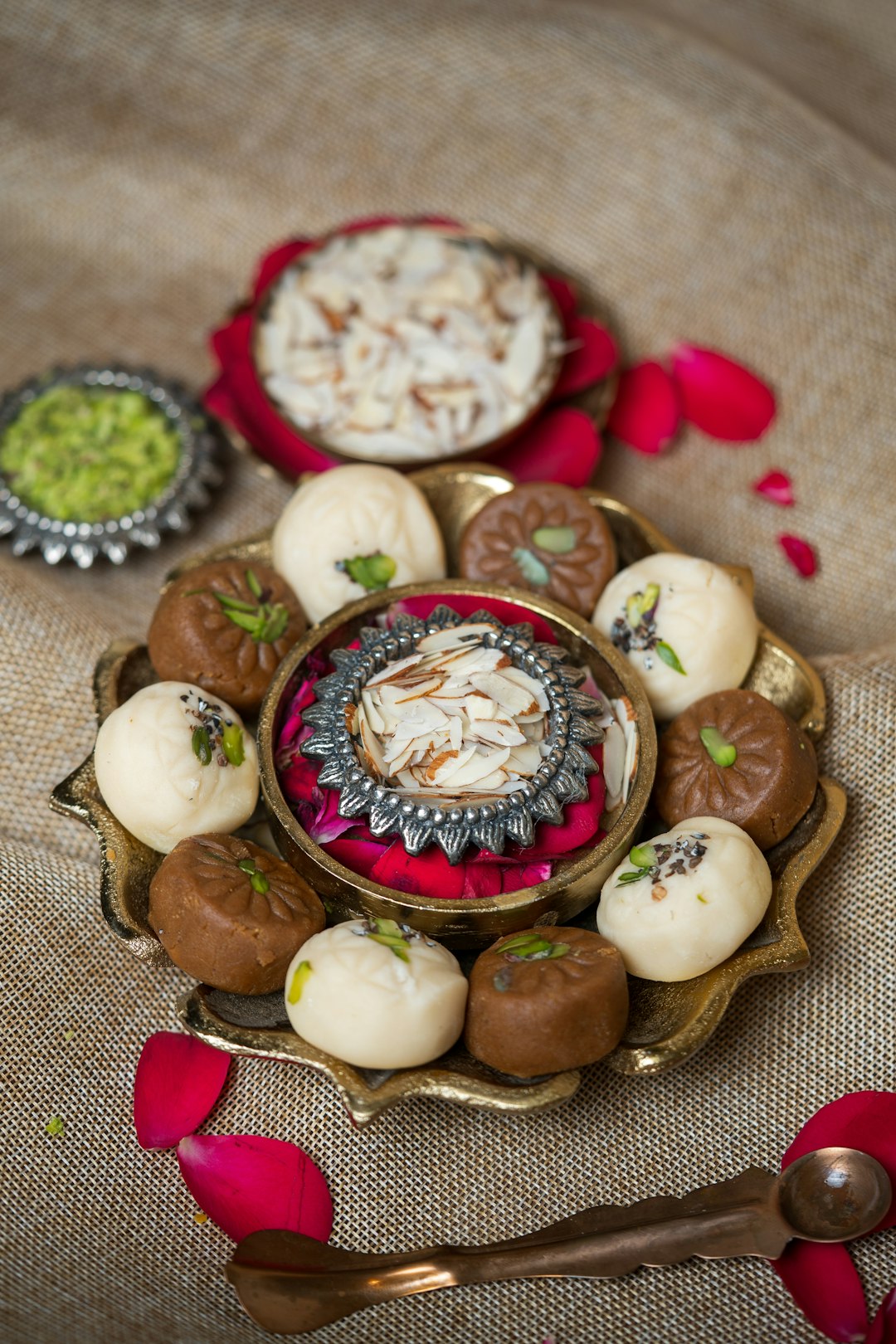
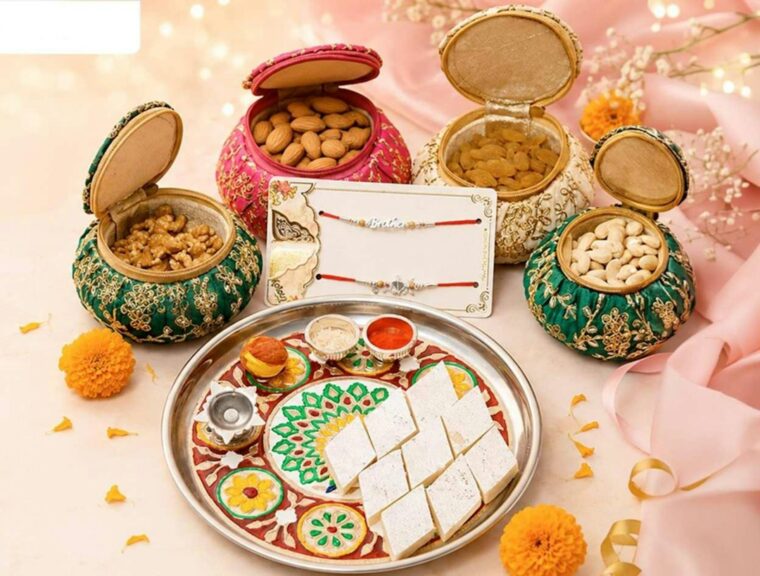
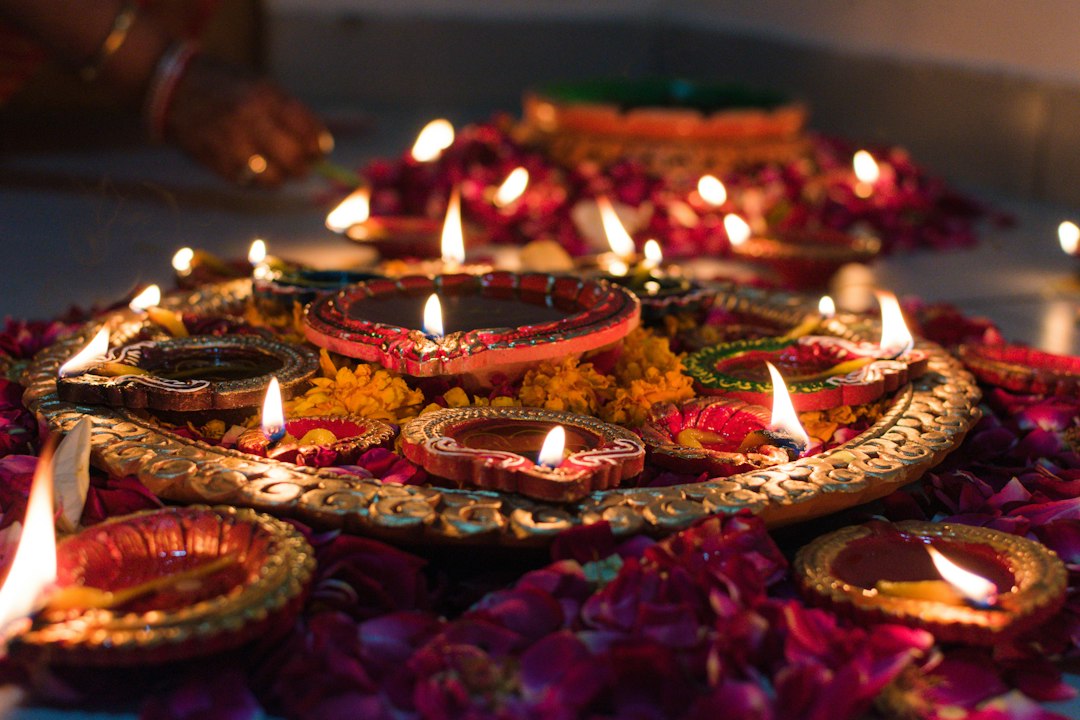
Bhai Dooj falls on Wednesday, 11th November 2026 — two days after Diwali’s diyas are lit. In households across North India, it is the festival where sisters take center stage: a tilak on the brother’s forehead, a thali of sweets and a lit diya passed between hands, a prayer for his long life, and a gift exchanged both ways. The day around that ritual rarely stays in one place, though — it usually means visiting multiple homes and being photographed more than any other festival this season. If you’re choosing a Banarasi saree for Bhai Dooj, or shopping for one as the gift itself, one fabric suits this kind of day with unusual precision: Banarasi chiffon.
Why Bhai Dooj Calls for a Light, Luminous Banarasi Chiffon Saree
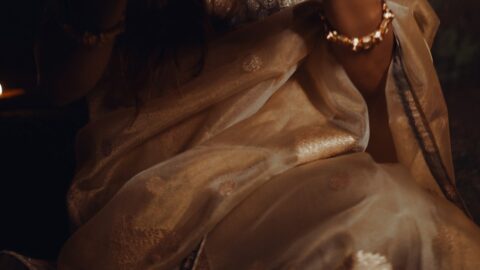
Bhai Dooj rarely happens in one place. There’s the tilak ceremony itself, often performed sitting cross-legged on the floor; then lunch at your parents’ home, and sometimes a second round at a brother’s or in-law’s house. A handwoven Banarasi chiffon saree is built for exactly this kind of moving, multi-stop day — it is the lightest of the Banarasi weaves, sheer and fluid against the body, yet it still carries the zari border and butti work that make a saree feel festive rather than everyday. Where a heavier silk can feel like a commitment by the third house of the day, chiffon simply moves with you.
Choosing Your Fabric: Chiffon, Soft Silk, or Katan Silk
Not every Banarasi weave is built for the same kind of day, and knowing the difference makes Bhai Dooj shopping considerably easier.
Banarasi Chiffon is the featherweight choice — a fine, almost translucent weave that drapes close to the body and breathes easily through a day spent sitting on the floor for the tilak, standing for photographs, and travelling between homes. It still carries a handwoven zari border, so it photographs with genuine festive richness without feeling heavy on the shoulder.
Soft Silk sits a step up in body — more structure than chiffon, but easier to manage than a full Katan drape. It’s a good middle ground for a more formal family lunch where you want extra presence in the saree, without the weight of pure silk.
Katan Silk, woven from pure twisted mulberry silk with dense zari work, is the richest and most ceremonial of the three — many women save it for a bigger joint celebration, or when the gift itself needs to feel like a true heirloom rather than a daywear choice.
Gifting a Saree for Bhai Dooj? Here's How to Choose Well
Many brothers mark Bhai Dooj by gifting their sister a saree rather than jewellery or cash. A few things make gifting easier if you’re buying on someone else’s behalf:
- When in doubt, go lighter: A chiffon or soft silk saree in a well-loved colour (maroon, bottle green, royal blue) is easier to wear well than a heavily worked piece in an unfamiliar shade.
- Check the blouse situation: Most Banarasi sarees come with an unstitched blouse piece, so factor in tailoring time before the day itself.
- Buy a little early: Bhai Dooj follows right on Diwali’s heels, so shop the week before rather than the night of — blouse stitching needs lead time.
Matching Your Saree to Each Bhai Dooj Moment
Because the day often has more than one stop, it helps to plan by occasion rather than a single saree:
- The tilak ceremony itself: A chiffon Banarasi in a warm, auspicious shade keeps you comfortable sitting on the floor for the ritual and the thali exchange.
- Family lunch afterwards: A Soft Silk saree in a jewel tone gives you more festive presence for the photographs that follow.
- A combined Bhai Dooj and family reunion: This is where a Katan Silk saree earns its place, especially with a larger group photograph planned.
The Best Colors for Your Bhai Dooj Saree
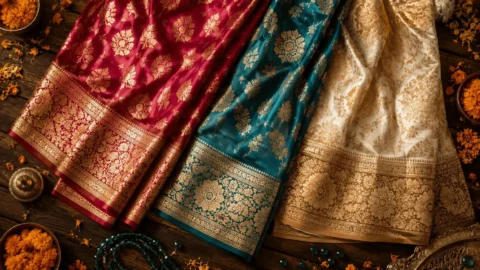
Red, maroon, and gold remain the most traditional choices for Bhai Dooj, echoing the same auspicious palette as Diwali just days before. A deep red or maroon Banarasi chiffon with a gold zari border photographs beautifully against a lit diya and a thali of sweets. Royal blue and bottle green are increasingly popular for sisters who want something festive but distinct from the red-and-gold they likely wore for Diwali itself, while a soft ivory-and-gold combination suits a simpler, daytime tilak ceremony.
Styling Tips for Your Chiffon Banarasi Saree
- Blouse: A solid-colour contrast blouse — a deep green against a maroon chiffon, say — lets the sheer fabric and its zari border stand out rather than disappear into a matching tone.
- Jewellery: Chiffon’s lightness pairs well with one statement piece rather than many small ones — a temple-style necklace or jhumkas is usually enough.
- Draping: A well-fitted petticoat close to your waist size keeps a chiffon drape from slipping as you move between the floor-seated tilak and standing conversations.
- Practical touch: Keep 2–3 safety pins at the waist pleats and pallu shoulder — chiffon is light enough to shift over a long day of visiting.
Caring for Your Handwoven Banarasi Chiffon Saree
Chiffon’s sheer, delicate weave rewards a little extra care once the festivities are over:
- Dry clean only — chiffon’s fine threads and zari work can be damaged by home washing and regular detergent.
- Store flat or loosely folded in a soft muslin cloth rather than plastic, which traps moisture and can yellow the sheer fabric over time.
- Apply perfume and hairspray before draping, never directly onto the saree — chiffon marks more easily than a denser silk weave.
- Steam rather than iron where possible; otherwise use the lowest silk setting with a thin cotton cloth between the iron and any zari border.
Frequently Asked Questions
Is chiffon too light for a “proper” festive look on Bhai Dooj?
Not at all — a handwoven Banarasi chiffon still carries a genuine zari border and woven motifs. It reads as festive, simply without the weight of pure silk, which suits a day with multiple stops.
What if Bhai Dooj is the only saree occasion I’m shopping for this season?
Chiffon is a versatile choice precisely because it isn’t locked to one occasion — the same saree works comfortably for daytime family gatherings well beyond Bhai Dooj itself.
Should I gift my sister a Katan Silk saree instead of chiffon?
If the gift is meant to be an heirloom she’ll keep for decades, Katan Silk’s richness makes sense. If it’s meant to be worn comfortably and often, chiffon or soft silk is the more practical gift.
Shop Bhai Dooj-Ready Banarasi Sarees at Kashi Sarees
Every saree we sell is handwoven by weaver families in Varanasi, carrying forward a craft passed from loom to loved one for generations — which is, in its own way, exactly what Bhai Dooj celebrates. Whether you’re choosing a Chiffon saree light enough for a day of visiting, a Soft Silk piece for the family lunch, or a Katan Silk saree for a bigger reunion, explore our full shop to find the handwoven piece that will carry this Bhai Dooj well into next year’s.